Monday, November 27, 2006

Great, Meaningful Moments in Modern Art (Continued)

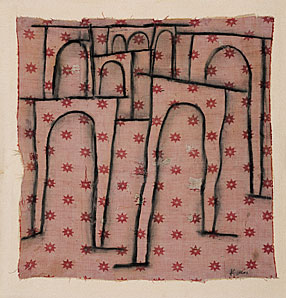
I gotta say that I was being completely sincere when I ascribed the words "great" and "meaningful" to Paul Klee's "Revolution of the Viaduct." There are only simple shapes and colors on the canvas, but is that all there is to this work? Upon closer examination, the painting reveals more than meets the eye. It seems that Klee (pronounced "clay") might have been trying to say something about individuality and non-conformity, possibly in response to the rise of the Nazi party in his homeland, Germany.

A Roman viaductEach shape resembles a cut-away section of an ancient Roman aqueduct. Each differs from the others in size, shape, color, and apparent distance from the viewer. But Klee gives us clues that he is thinking beyond mere geometry and perspective here. The serifs at the bottoms of the figures are reminiscent of feet, and transform the columns into legs. The differing lengths of the legs create the illusion that the figures are mobile, and they are coming toward us.

Arches of the Bridge Break Rank--an earlier version.  You can see the progression and clarification of ideas from this to the final version.It would seem, then, that the arches are standing in for people, but why did Klee choose to paint human beings instead? His visual subject must be considered. Roman viaducts were rigid structures comprised of dozens or hundreds of columns and arches—all uniform in size and shape. Each arch yielded itself to the whole, and the structure was strong as a result. As an allegory to society, the ancient viaducts meant glorification of the whole and de-emphasized the individual. Klee seems to be suggesting something different: that society consists primarily of individuals.

Each figure is individual; no two are alike. Their different postures and varying degrees of motility suggest attitude and will. Klee has constructed a society that values the individual and is only loosely unified. His society derives strength from its diversity, however, and the gold, warm colors and illusion of motion suggest that it is advancing toward us, irresistibly and inevitably. Furthermore, his figures may do as they please, and while they do march toward us as a group, they will not be conformed. These seem to be the major themes of the work: individuality, non-conformity, and celebration of strength in diversity.

Klee might also have been responding to German National Socialism (he painted the work in 1937-38). His arches defy the Nazi ideal of a homogenous super-race. The arches also stand in contrast Nazi architect Albert Speer’s uniform design of the 1936 Olympic Stadium in Berlin. Finally, the title of the painting might be a twist of Nazi propagandist Heinrich Himmler’s statement that the Bolshevics and Jews made up a “revolution of subhumans.”

Klee once said his goal was to paint the human spirit. In “Revolution,” he has done it as a celebration of individuality and a rejection of all that would quash it.

Thursday, November 09, 2006

BodyFlex Daily Workout

I would like to thank Kristin Agrimson for bringing this to my attention (she stole the VHS from her mom back in the day).

It'll be the next Tae-Bo!

Wednesday, November 01, 2006

Bye Bye Barker

After fifty years in television (thirty-five of those on The Price Is Right), Bob Barker has announced that he is stepping down. The 83-year-old will retire in June of 2007. Now, I've thought he's been pretty cranky the past few years, but I get all misty-eyed at the thought of a Barkerless TPIR. It was hard enough to lose Rod Roddy; I grew up with both of these guys. I gotta buy myself a ticket to LA and witness the magic while I still can. The Dice Game, Plinko, and Hole-In-One just won't be the same without good ol' Bob.

Here's some video of Bob gettin' grumpy with an utterly clueless contestant.

Monday, October 16, 2006

Spoonus: Conclusion

Spoonus: But I still doubt that our souls exist prior to birth. We could be given the knowledge at the moment of birth, as Simmias said.

Socrates: But at what other time do we lose it? Do we lose it at the very time we acquire it, or can you mention any other time? If those realities which my friends and I were always talking about exist (and we know with certainty here in the afterlife that they do), the Beautiful and the Good and all that kind of reality, and we referred all the things we perceived in the body to that reality, so the soul must exist before we are born.

Spoonus: But what if we do not forget our knowledge in the first place? Let us consider those things which are absolutely knowable: Justice, Beauty, Goodness, and the like. When does a person recollect what Justice is? When he is mature? Or does not even a child know? If children did not know what Justice was, would they be forever tattling on each other? And are not children drawn to that which we call Beautiful, and attempt to exemplify beauty in their artwork? And do not even infants know what is Good? Immediately after birth, a baby knows that his mother’s milk is good.

Socrates: What you say might be true, but can an infant demonstrate any knowledge of mathematics? Of course he cannot, because he has forgotten it, and has furthermore forgotten how to speak!

Spoonus: He might not know anything about the higher orders of mathematics, but he certainly knows what “more” and “less” are when he is fed. The difference between his knowledge and that of Pythagoras is in his ability to articulate his knowledge, or perhaps in the extent of the potential of his knowledge. By potential, I mean that which can come about, but which has not yet.

Socrates: Which is it? According to you, either he has full knowledge, and cannot articulate it, or he has potential knowledge, which seems to be no knowledge at all, but I am not sure which you mean.

Spoonus: I say it is both. I hope you are not weary of hearing about Meno’s servant, because I would like to refer to him once more. I submit to you that he, being given the knowledge at birth, was given full potential knowledge, contained somewhat like a full oak is contained in an acorn. However, he could not articulate it. As he grew up, he acquired the means of articulation. When you questioned him, the potential knowledge was realized in his mind, and became actual, verifiable knowledge which he articulated in response to your inquiries. So he had not forgotten it; it had merely not been actualized. Therefore, the articulation of his knowledge does not prove that he knew anything before birth, only that he had knowledge at birth. Therefore, one cannot prove that the soul is eternal.

Socrates: On the contrary, in this case you have only argued that the soul does not exist before birth, and have said nothing about the state of the soul after death. Have you read my other excellent proofs of the existence of the soul after death, such as the Argument from Opposites or the Argument of the Form? Look at it another way: if the soul does not exist after death as you have stated, how then is it that you are here in Elysium talking to me?

Spoonus: By Zeus, I don’t know! However, I have read your proofs, and it seems that since our souls will never perish, we should have adequate time to discuss them. We must also inquire as to how something could have a beginning, but no end, and furthermore, if the soul is given knowledge at its beginning, what or who gives that knowledge. What is rent like at the Tower of Cronos? Do you need a roommate?

Thursday, October 05, 2006

Spoonus, Part I

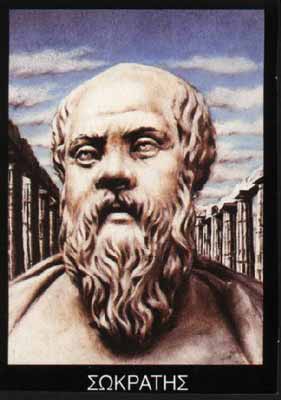
The Spoonus, also known as The Socratic Soul, is the most recently discovered Socratic dialogue. Spoonus was a student of Socrates (via Plato’s writings), and has recently died; his soul transmitted to the underworld. He wishes to question Socrates regarding the philosophy of the soul that Socrates maintained in life. Spoonus’s soul arrives in Elysium, where the soul of Socrates has resided since his execution, although he plans to move into the Tower of Cronos as soon as the Form of his Credit Check is processed (although in his case it is probably just a formality). Spoonus arranges to meet with Socrates before he leaves Elysium. Scholars disagree as to whether this is an account of the historical Socrates, or whether the writer, possibly Spoonus himself (or his reincarnated soul) is putting words in Socrates’ mouth.

SPOONUS: Hello, Socrates. It is indeed an honor to have an audience with you. I am sorry I am late; Charon did not have change for a drachma.

SOCRATES: You are outrageous, Spoonus. Have you come to converse with me about the journey hither? Or have you come to inquire of me, as Meno, Crito, and others did in life? Surely, as a soul freed from the body, you know everything, and there is no knowledge which I can impart to you.

SPOONUS: Perhaps there is. You once said that “we must at some previous time have learned what we now recollect.” If we learned before life what we recollect in life, we must have lacked knowledge before we learned it as souls, for to learn is to acquire knowledge, and how can one acquire what one already has? So perhaps there remains something I can learn even now. At the very least, help me to recollect the words you spoke in life.

SOCRATES: I will certainly attempt to do so.

SPOONUS: I am interested in your ideas about the soul. As I understand it, you once proved that the soul is eternal by demonstrating that a servant boy, who had no apparent knowledge of geometry, could arrive at a correct mathematical conclusion without any instruction at all. That is to say, the boy had knowledge which he had not been taught. If he had this knowledge, he must have known it before birth and forgotten it, but you helped him “recollect” it.

SOCRATES: What you say is true. In fact, all knowledge obtained in the body is recollection. For when men are interrogated in the right manner, they always give the right answer of their own accord, and they could not do this if they did not possess the knowledge and the right explanation inside them.

SPOONUS: So then, if men are not interrogated in the right manner, they might not give the correct answer?

SOCRATES: To speak of a right manner implies a wrong manner, so what you say might be true.

SPOONUS: Let us explore, then, the correct manner of interrogation. In questioning the boy, you asked him what the dimensions would be of a square with an area of eight feet, based on the knowledge of the dimensions of a square with an area of four. You said, “The side of this is two feet. What about each side of the one which is its double?” He replied, “Obviously, Socrates, it will be twice the length.” Clearly, he was incorrect. You questioned him further, he saw his error, and he arrived at the correct dimensions.

SOCRATES: It happened exactly as you say. I did not teach the boy anything, but all I did was question him.

SPOONUS: But as to the “correct” way of interrogation, you knew the correct answer, and so were able to ask him questions that aided his “recollection.” Did you not lead him in your questioning? Would you not say that the “correct manner” is merely that by which the knowledgeable leads the unknowledgeable, and is that not teaching?

SOCRATES: I did not lead him; I only asked him questions about what was true. He merely recollected things in order, from the more simple principles of linear doubling to the more complex principles of two-dimensional doubling.

SPOONUS: Yet if you had not known, or recollected, the answer yourself, would you not have been unable to interrogate him correctly? If someone who lacked knowledge, like Euthyphro, had questioned him, would it not have become apparent that the boy could not recollect the truth, and at best could recollect only part of it? And does it not seem that he “recollected” both truth and falsehood? As a student of Euthyphro he would have learned or recollected nothing wholly true. Therefore, you did teach him.

SOCRATES: On the contrary, whether I had continued questioning him or not, if the boy was philosophically inclined, he would have questioned himself, and demonstrated to himself the correct answer. He would have recollected it on his own without my influence, although it might have taken him some time. Therefore, all learning, whether under a tutor or on one’s own, is recollection. And if it is recollection, then knowledge exists in the soul before birth, and the soul is eternal. We must recollect what our souls know, however, because we forget it when we are born.

Tuesday, September 19, 2006

Anna vs. Charlie

When I’m not in a classroom learning about Platonic Forms or about the difference between a disk and a disc, I clean pools to finance my education. Pool cleaning is a solitary job; the pool serviceman drives alone from back yard to back yard with his tools and equipment, with no companion other than the hot Texas sun and the mediocre Dallas radio. But some stops along the way are not so lonely. Sometimes there is a dog. On my route, there are two.

When I met Anna, I was unprepared. I drove my truck to the back gate and swung it open. She was waiting for me, a knee-high, short-haired, caramel-colored canine of a breed I’d never encountered. I quickly shut the door expecting an attack or an escape attempt. But I had misjudged her. I soon learned that Anna didn’t want to run away, and she didn’t even make a sound as I brought in my equipment. She just wanted to be near. She followed me around loyally, but if she dashed off to scare away some crows, she’d come back when I called (I learned her name from her tags). She would chase a ball if I threw it, too. In the ensuing weeks, Anna became my friend—sweet, but never smothering. I started to like the idea of working with dogs.

And then I met Charlie. (Charlie’s real name has been withheld for the sake of his own dumb innocence.) I met him a few weeks later in a different neighborhood. Weighing in around 45 pounds, he has long, black hair and an aborted tail. Charlie is the out-of-shape co-worker you wish wasn’t in the cubicle next to yours. The first thing one notices about him is the smell: pure odeur de chien humide, which he maintains by periodically wading in the pool. He breaths heavily upon the slightest movement, or anytime he’s standing, or anytime he’s just lying around. And he likes to stick his nose in my business: “Is that a tennis ball in your pocket?” Whenever I have to walk back to the truck for supplies, Charlie follows, until we head down the stairs; inertia then takes over and propels him ahead of me. He eats every chance he gets. I would give him points for loyalty, but since his particular brand means remaining within 15 feet of me, it means I can always smell him, and his only asset becomes void. He won’t be told to leave, either. His b.o. and behavior really strain our relationship.

My relationship with Anna is blissful, however. She’s a saint. If I could, I’d take her home with me. I’d take Charlie with me if I could, too, but I’d set him free somewhere outside the city limits, where nobody would smell him. He’s a real son of a bitch.

Thursday, August 17, 2006

The Gypsy Tea Room's Amps Go to 11


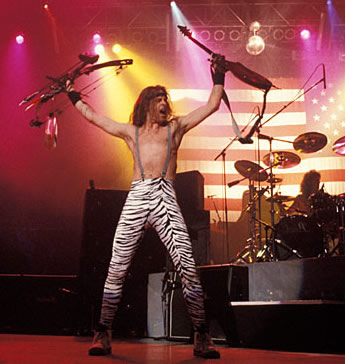
I never made it to the Ted Nugent concert in Fort Worth, thanks to the underwhelming support of my "friends," but my man Colin and I had the foresight to buy tickets to a Jurassic 5 concert recently, and so, on July 31, I experienced (for the first time) a rap show that didn't feature Grits as the headliner. Now that my hearing is back to about 90%, I thought I'd provide a sort of review.

So, going to the J5 show...Wow, I'm a white guy going to a rap show! Aren't I unique? My counter-racial taste in music amuses me. Who but myself and Colin would pay money to see a concert of traditionally black music? I wonder if there will be any other white people there? Maybe a few. Well, probably more than a couple, since J5 is not exactly a crunk group, but leans toward organic-sounding beats and old-school rhymes. Man, there will probably be more whites than the ideal, which is zero, but should still be a good time.

Uh-oh, there are a lot of white people in this line. My goodness! Is this how the show's going to be? I wanted to get away from these people. Well, maybe things will improve inside. Yes, I'm sure that all the African-Americans are just inside enjoying the air conditioning.

Hmm...there are a lotta honkies up in this Tea Room. What's the deal? I guess more whiteys than I thought like J5. Well, it's kinda dark in here, and I can't see the whole room. Maybe all us crackers are culturally inclined to stand around near the stage while waiting for a show to start.

Hello, X-Clan. Since all opening acts suck, I'll stand here politely and endure your show. You can't be any good, so don't expect any enthusiasm from me. Well...that
is a nice bass line, I guess. Ya know, now that I think about it, I think I kinda dig this beat...could X-Clan be a good opening act? Ah, I see you've put your friend on the payroll, and his job is to wave an African flag on stage and dance around while you rap. I'd like to think I'd pay one of my untalented friends to do something on stage if I ever made it big. Who am I kidding, I just hope one of my talented friends pays me to do something easy when they're famous. Sure, I'll get my hand up. I remember Aaron Mueller doing this right-hand-wave-to-the-beat thing at a dcTalk concert years ago. I guess it was a phenomenon. Boy, he sure was way more in tune with urban culture than I was in high school. I'm jealous. Oh well, I'm waving my hand now. What? Did X-Clan's Grand Verbalizer just diss the "Laffy Taffy" song? Yes! I'm a fan! I'm a fan! Good times, now!

Oh, shoot, I failed to wave my hands in the air. Grand Verbalizer asked for it, but I hesitated. That was probably the one and only opportunity I will have in this life to throw my hands in the air and wave 'em I like just don't care. Oh, well, maybe another will arise.

Feet hurting...ears already ringing...tired of waiting for J5 to take the stage...

Jurassic 5! I can't believe I'm seeing these guys live! Their voices sound like they do on the album! Oh my gosh!!! Dakir! Marc 7! DJ Numark! Those other guys whose names I can't remember!

Let me look behind me to see what the crowd looks like. Wow, overwhelmingly white. So my taste in rap falls right in line with my race. Dang! But, but, there are some black people here, right? Please? Hey, there's one right behind me. I should say hi, develop some kind of rapport. Concerts bring out the extrovert in me. Wait, wait, I've just
thought about talking to a man based on the color of his skin. Does that make me racist, albeit a sort of twisted, reverse racist? I want to say hi so I can feel like I know the only black guy here, and that will somehow make me cool? Uh, just going to stick to looking over a Colin when a witty rhyme or a familiar groove is heard. Yeah. "Got people screamin' 'Free Mumia Jamal!', but two outta three of ya'll will prolly be at the mall!" That's right, Chali 2Na (think: Charlie Tuna), you tell 'em! Rap in that cool bass voice.

Wait, everyone is cheering for Chali. Is he the crowd favorite? Can I have the same favorite member of the group as the rest of these African-wannabe crackas? But I enjoy Mr. 2Na because he's also in Ozo Motley, and for his rhyme patterns and enunciation. But...but...well, I tell you what, white kids, the other members of this group are just as good as Chali, and I'm not going to cheer for him and make the others feel bad.

Oh, here we go bouncing our hands to the beat again. Kinda cool, but I gotta make sure I keep it up there just a little longer than everyone else, to show that I'm really "down" with the music and not just doing it because a member of J5 asked us to do it again for about the 20th time. But this music is really good! And they have great stage presence! And unlike other rap acts I've seen live on TV, these guys don't suck! They rhyme on time. The DJ is talented.
They sound good! I just wish they sounded about 100 decibels instead of 125.

Well, that was fun. Back to the car. What's that you say, Colin? Jurassic 5 is the spit? You'll have to speak a little louder until my head decompresses and the tuning fork in my ear stops playing that A. Good times, brother!


Tuesday, August 01, 2006

What???

No takers on The Nuge? Come on, guys and gals! It's only $12.

Not even you, Chris?

Tuesday, July 25, 2006

Lessons I Refuse to Learn

#1. It is better to go into credit-card debt, however deep, to get one's car inspected and repaired than it is to let the inspection expire. A constable will eventually find you.

#2. Paying off one's credit card to be "debt-free" is a bad idea. Being "debt-free" is always temporary and only serves to make the next necessary debt more painful.

#3. Man cannot live on bread alone. And in Dallas, even if a man's rent is $400 a month, he cannot live on less than $1000 without either a Visa card or food stamps.

Sunday, June 04, 2006

Snakes on a Plane Update

I think there's one man who won't be seeing Snakes on a Plane, because once you've lived it, what's the point? Meet Monty Coles.

Thursday, June 01, 2006

Skipping: Not That There's Anything Wrong with That

Matt Linebarger made a good point not too long ago: it's hard to find an album that's wholly listenable. An artist or band might put 10, 12, or even 20 songs on a CD, but rarely can one listen to an entire disc without skipping a track or two, sometimes more. Even U2 has songs that should be skipped, says he, and for a Linebarger, this is a statement akin to "3 John should not be a part of the canon". Anyway, I happen to think there are quite a few CDs out there that are 100% enjoyable.

For starters:

The Gotee Brothers: Erace
The instrumentation on this disc is a feast for the ears--a Southern feast, the kind with fried chicken and grits. In other words it's not exactly haute musique, but it makes you feel good deep down inside. The lyrics are great, too, dismantling racism ("colors don't hate") and celebrating the simple life ("nothing like a fat cup, sweet tea and ice").

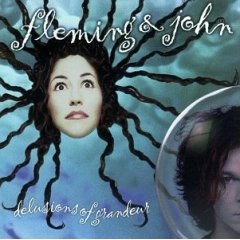
Fleming and John: Delusions of Grandeur
Fleming and John's style was like nothing I'd ever heard when it first tickled my ears back in '97, and there's still nothing quite like hearing Fleming's voice soar and swoop over John's eccentric rock backgrounds (he plays all the instruments, alone it would still be something worth hearing).

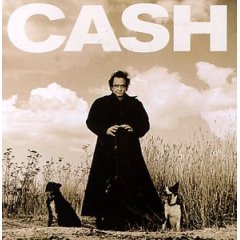
Johnny Cash: American Recordings
The first of five collaborations between Cash and legendary producer Rick Rubin, the first American Recordings is still the best. There's nothing here but Johnny's guitar and his voice, cracked and weathered, carrying the weight of the world, but still somehow finding enough strength and conviction to carry an album.

There are a plethora of records out there that require no skipping: Radiohead - OK Computer, The Postal Service - Give Up, The Pixies - Surfer Rosa, Rage Against the Machine - The Battle of Los Angeles, Ben Folds - Songs for Silverman, Dave Matthews Band - Crash, and Counting Crows - August and Everything After.

But I think an album can still be great, even if there's just one song you have to skip. One song doesn't diminish these: The White Stripes - Get Behind Me Satan, Jurassic 5 - Power in Numbers, Brainwash Projects - The Rise and Fall, Soulfood 76 - Original Soundtrack, and Medeski, Martin, and Wood - The Dropper. The Dropper is particularly noteworthy; even though Martin's percussion-only "Illinization" is awful, the rest of the disc is pure improvisational genius. It's like a great puzzle that your mind unlocks after a few listens, and inside is a brand-new, joyful paradigm.

Have I missed anything? (I mean, besides the whole U2 and BeeGees catalogues.)

More after the jump.

Friday, May 26, 2006

Old Man Bites Tenderly

Let's talk about game shows for a minute. I like game shows. Before reality shows became dominant, the game show was a great way to kill half an hour during dinner. But when was the last time we Americans came up with a truly great game show? I mean, we have the Big 3: The Price is Right, Wheel of Fortune, and Jeopardy, but what have we gotten since those were created? Who Wants to Be a Millionaire and The Weakest Link were imports, were they not? They seemed good at the time, but had no staying power; nobody watches those anymore. Deal or No Deal: you tell me. It's engaging, a little addictive, but can it stand the test of time?

When I think of great new game shows, I look to Japan. First there was Takeshi's Castle (dubbed into English as MXC), and now comes a show (actually a segment of a variety show, another lost form here in America) called Silent Library. Because it takes place in a library, contestants are forced to play (you guessed it) silently. Why can't we have game shows like this in the Land of the Free?


The non-Japanese man is Dutchman Ernesto Hoost, four-time K-1 champion.

Wednesday, May 24, 2006

Mr. Procrastinator Responds to Your Comments

Friend, did you graciously comment on a previous post, but never received a reply? I'm sorry, I left you hanging. My oops, my bad. Well, hang no more! I went all the way back to the beginning and replied to comments that you left. Some aren't much, but if you want to read 'em here are the links:

Deus Caritas Est, Meet Your Match, You Might Be an Evangelical If..., Photo Tour of the Balkans, Part II, Regarding the Return of the Beard, Walk Like a Cowboy, The Big One, Chef Cooks Others but Can't Take the Heat, I Got Four Words for Ya (Snakes on a Plane)

And now back to the great ongoing soundtrack debate...

Thursday, May 18, 2006

This One Is for the Ladies

Girls, why do you buy so many movie soundtracks? I don't get it. In my life, I've only felt the need to buy two (both of them John Williams scores), and I sold one and didn't really enjoy the other. When I buy music, I want to hear a body of work from a creator. Soundtracks (and scores), on the other hand, are compilations (or accompaniment), formats that seem limited by the needs of a movie director. Sometimes they're all over the place, and other times they sound homogenous, and a lot of the time they'll have one or two good songs mingled with a bunch of junk, none of which makes me want to buy them. And I don't think I know any guys that have more than one; most don't own any.

So why do you buy them? Some of you have a handful, but some of you listen to almost nothing but soundtracks (you know who you are). Why is that? I'm genuinely curious. Caity Hannon, you need to post your reply! It's exactly what I'm looking for!

Friday, May 12, 2006

It Just Ain't What It Used to Be


Allow me to drop some personal science on the ongoing music discussion. I went to a concert last night (an increasingly rare occurence for me), and the experience is relatively fresh in my mind.

After standing in line for nearly an hour outside (surrounded by legions of 13-year-old girls), I was treated to another hour of standing inside as Amanda, Stuart, Stephen and I stood as close as we could to the stage in anticipation of The Main Event. My feet started to let me know they weren't having much fun, but I assured them it would be worth it. Presently, the opening band, the Damnwells, emerged to start the show. Their first song featured a thundering bass drum beat with equally bombastic bass line. We all immediately became aware that we were standing right in front of the subwoofers, as our breastbones violently vibrated to the 80hz beat. It was unpleasant. No, it was painful, but in the following songs, as the beat settled down, real pain birthed and grew in my ears, especially the left one, which was so serendipitously positioned to receive the most sound possible from the nearby overhead speakers. The Damnwells weren't bad, but they weren't good, either, and I didn't appreciate their damaging my hearing with their mediocre music. So, I did something I haven't done in 20 years, I moved to the BACK at a rock show.

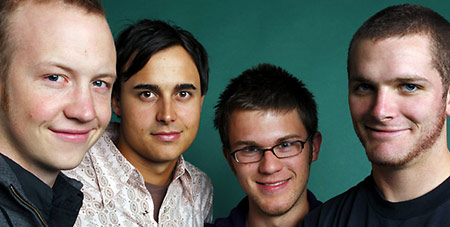
When my head cleared, I realized I've only ever enjoyed two "opening" or "support" bands (those bands put on the bill ahead of known performers, for purposes of exposure) in my entire concert-going career. The first was the legendary Buddy Guy, who opened for Dave Matthews Band at Soldier Field (before it was converted into a space station). Let me tell you, Buddy has some soul, and it was a blessing to have his acoustic waves wash over me. The second opening band I really enjoyed was an little band the Fray, when they opened for Ben Folds. They were upbeat rock rock that employed a piano as a featured instrument, and I liked their sincere sound with a pop sensibility, so I was very willing to pay $20 to see them again.

Back to the show: last night, the Fray did alright, yep. They played the songs from their album and one cover. Maybe in my younger days, that would constituted a divine experience. Now, it's just not enough. I wanted to hear songs from their little-know EP. I wanted to hear more covers. I wanted new work. I wanted...to feel like I felt back in 1994 at the Audio Adrenaline concert, when the sea of people in front of me was jumping up an down in unison, or how I felt a year later at an outdoor Jars of Clay show, when I was the one jumping and I didn't care if anyone noticed I had no rhythm.

I think those days are gone. I gotta find something else to appreciate in music. I'm starting to find it, I think. Small things, like a catchy little tune, or the simply lyric, "Some times the hardest thing and the right thing are the same." Nothing earth shattering, but then again, was rock ever that big of a deal?


*Listen to the Fray. I like!
*Are you a rockist?

Friday, April 21, 2006

I Got Four Words for Ya

Snakes...On...A...PLANE!

php hit counter

Please note: "Plane" is short for "airplane." This is a preview (or "trailer") for a movie about snakes, and more specifically, about a very unique group of snakes ON A PLANE! (Movies about snakes and airplanes are nothing new. However, no film maker has yet been brave enough to attempt to combine the two genres). Also, Samuel L. Jackson is present, with the snakes, which are on a plane. Recap: Snakes--On a Plane. Say it with me now. Snakes on a Plane. This is gonna be awesome.

Friday, March 17, 2006

Chef Cooks Others but Can't Take the Heat


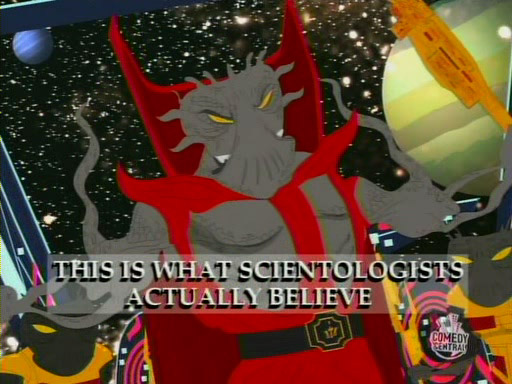
Isaac Hayes has quit South Park because of the show's "intolerance and bigotry toward religious beliefs." I wonder if he means the countless times the show has slammed Christianity, Catholicism, Judiasm, Mormonism, and the person of Jesus in its nine years on the air, or if he's referring to their recent diss of Scientology, which he practices. Hayes, aka Chef, says "there is a time when satire ends and intolerance and bigotry towards religious beliefs of others begins."

I like what SP co-creator Trey Parker had to say about it: "Past episodes of South Park have skewered Catholics, Jews and Mormons, among others. [We] never heard a peep out of Isaac in any way until we did Scientology. He wants a different standard for religions other than his own, and to me, that is where intolerance and bigotry begin."


...Or maybe Hayes didn't quit and all the nastiness was published as a part of a Scientologist conspiracy. I hope you at least watched the episode. Stay tuned for my upcoming expose of Masonic handshakes...

Monday, March 06, 2006

The Big One

Well, it looks like it's finally going to happen. Many have been hoping for it and praying for it for years. Some have prayed that it wouldn't. It is a renewed battle over abortion in this country.

The stars began to align not too long ago, with the retirement of two supreme court justices and the appointment of two replacements who seem conservative enough to think about overturning Roe v. Wade. Roe was at the heart of the debate over both candidates, and a particularly bitter battle was fought over the confirmation of Samuel Alito, who once wrote the minority opinion favoring mandatory notification of the father of a potentially aborted fetus.

Wasting no time, the South Dakota House passed a bill that would outlaw nearly all abortions in that state, and its Senate quickly followed. Almost immediately, Mississippi's House passed a similar bill. And on March 6, the governor of South Dakota signed their bill into law.

OK, pro-lifers, where do you/we go from here? Assuming the S. Dakota and Mississippi laws are challenged all the way to the Supremes, and the neo-conservative court overturns Roe, what then? We have to ask ourselves some tough questions.

Most importantly, What's going to happen to all those newborns? Adoption (the loving option)? That will help, but it won't solve the problem. Over one million couples wait to adopt every year in this country, but the number of abortions supercedes by as many as 300,000. And that assumes that every couple that wants to adopt is eligible--financially, ethically--to legally adopt the child. Let's say, for the sake of argument, that all the fathers of those unaborted children rescind their parental rights (as unlikely as that may be)
and
that 80% of those couples are eligible; that leaves 500,000 helpless, unwanted human beings brought into the world.

What kinds of situations would these children be forced into? According to the Guttmacher Institute, women "with incomes below 200% of poverty made up 30% of all women of reproductive age, but accounted for 57% of all women having abortions." This poses a problem. If eligible couples adopt without regard for the economic situations of the biological parents, 285,000 children would be born into poverty. How likely are the children to succeed in life if they are born into the slums of Chicago's south side, Oak Cliff, Atlanta, etc? How will they eat? How will they attend school? The welfare system is already overstretched. Perhaps more importantly, how likely are these children of disadvantaged women to be the victims of abuse?

I ask because not only is the government ill prepared to handle the potential influx of economy-draining infants, the right and the Church are completely and utterly unprepared to do anything about the situation. Most conservatives would not support government handouts for these new mothers, and this Republican-controlled congress would therefore most likely kill any bill that would further stretch the Fed's dollar for welfare "handouts." The impetus would then fall on non-profits and churches. How many of them are financially and logistically prepared to undertake a project of such massive proportions, of caring for 300,000 newborns? I submit to you, none, or so few that their impact would be unnoticed. If neither the goverment nor the church can care for these children, what kind of public support will there be for an abortion ban? Surely, these malnourished, uneducated, emotionally, physically, and sexually abused children would have been better off never having been brought into the world to begin with. Which is the greater evil--to end a dead-end life painlessly before it is even cognizant, or to bring it into the world to humiliate, torture, and rob it of its dignity? The good citizens of these United States will not stand for the mass abuse of hundreds of thousands additional innocent children.

Secondly, you/we, the pro-life camp, need to agree on when life really does begin. Does it begin at fertilization, or does it begin at implantation? I ask because there exists an alternative to invasive abortion, one which could solve the abortion debate, that begs an answer. Plan B, or emergency contraception, can be taken within three days of unprotected sex to prevent a pregnancy. It differs from the controversial RU-486 in that it will not work if a woman is already pregnant. Plan B prevents fertilization or implantation, and it is impossible to control which. Bottom line: a zygote will not survive if it is not implanted in the uterus. Do we defend all human cell integration, or do we draw the line at viable embryos, ones that have a chance of surviving, ones that will certainly develop into a unique human life? A delineation of "human life" (that which contains human DNA) and "unique human life" (that which can and will develop into a unique human being) speaks to other issues as well, e.g. stem-cell research and medicine.

The lawmakers in South Dakota thought Plan B had some merit, and included a clause permitting its use in Section 3: "Nothing in section 2 of this Act may be construed to prohibit the sale, use, prescription, or administration of a contraceptive measure, drug or chemical, if it is administered prior to the time when a pregnancy could be determined through conventional medical testing." I quote Slate's William Saletan: "Look at that language carefully. It doesn't just say you can take a contraceptive drug before sex. It says you can take such a drug after sex, as long as it's before conventional tests can detect a pregnancy."

Pro-lifers, now is the time to get your act together. Want to outlaw abortion? Great--come up with a plan to care for the lives that you defend; no mere Modest Proposal will do. We can say life begins at fertilization, implantation, or sometime in the third trimester (as the law currently reads); nobody's going to listen to anything else. If at fertilization, then writing a provision for Plan B is construing, in ever so small a way, a right to murder a select group of human beings: those who are unfortunate enough to be the product of rape. If at implantation, then we need to fight for contraception, including emergency contraception, to be distributed on-demand and at low- or no-cost. We must be prepared not only to fight, but to win, and to sacrifice our tax dollars, charitable contributions, and volunteer hours to deal with the consequences if we do. The majority of Americans believe that abortion is immoral, but even so most believe it should still be legal. Outlawing abortion will be an uphill battle, and a house divided against itself--believing one thing morally and legislating another--cannot stand.

Sources:
Patterns in the Socioeconomic Characteristics of Women Obtaining Abortions in 2000-2001, the Guttmacher Institute.

About.com Abortion Statistics

Take the Fifth, The Road from Roe, Slate

Reuters

Peep This Crunkness Wit' a Quickness

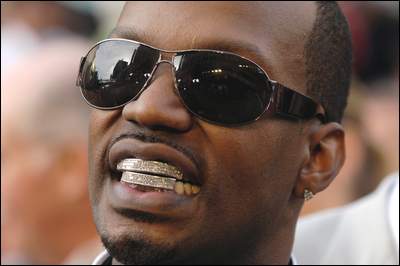
Check out the choppers on Oscar-winner Juicy J, who won Best Original Song for "It's Hard out Here for a Pimp."


Now that's what I call Teef!